

AGIBOT Dynamics
Doctor's Story | 8 Surgeries in 15 Days: AGIBOT's Multidisciplinary Clinical Coordination in Yichang
From July 2 to 16, Yichang Central People's Hospital consecutively performed 8 robot‑assisted surgeries. The AGIBOT Endoscopic Surgical System was moved between multiple operating rooms, supporting different teams with preoperative setup and intraoperative procedures.
These 8 surgeries covered urology and other laparoscopic minimally invasive applications, with participating surgeons including Zhang Ping, Peng Qing, Tan Yuyan, Hu Jingzu, and other experts. The case mix was diverse, ranging from complex cases such as prostate cancer and non‑functioning kidney to exploratory applications including thyroid nodules and breast masses.
Behind the tight schedule, what was truly tested repeatedly was the system's deployment efficiency, intraoperative response stability, and the equipment's ability to complement the surgeon's clinical judgment.
Two cases were particularly representative.
Remote Collaboration: Radical Prostatectomy Across 1,300 km
On July 2, the team led by Dr. Zhang Ping at Yichang Central People's Hospital, in collaboration with Professor Ai Xing from Chinese PLA General Hospital, performed a 5G remote domestically‑produced robot‑assisted radical prostatectomy using the AGIBOT Telesurgery System.
The patient had a history of prior surgery, with significant adhesions in the operative field and obscured local anatomical planes. Before the procedure, Dr. Zhang Ping's team and the Beijing side jointly rehearsed the dissection pathway, and carefully evaluated the 4K 3D vision, remote link stability, and contingency mechanisms, ultimately finalizing the remote surgical plan.
During the surgery, Professor Ai Xing in Beijing controlled the master console, while the patient‑side platform in Yichang executed synchronously. The system displayed tissue boundaries and critical structures within the narrow pelvic cavity, and the remote link stably supported the transmission of commands, allowing the procedure to proceed as designed.
As the adhesive tissues were progressively dissected, key steps including separation and resection of the prostate and related tissues were completed according to plan.
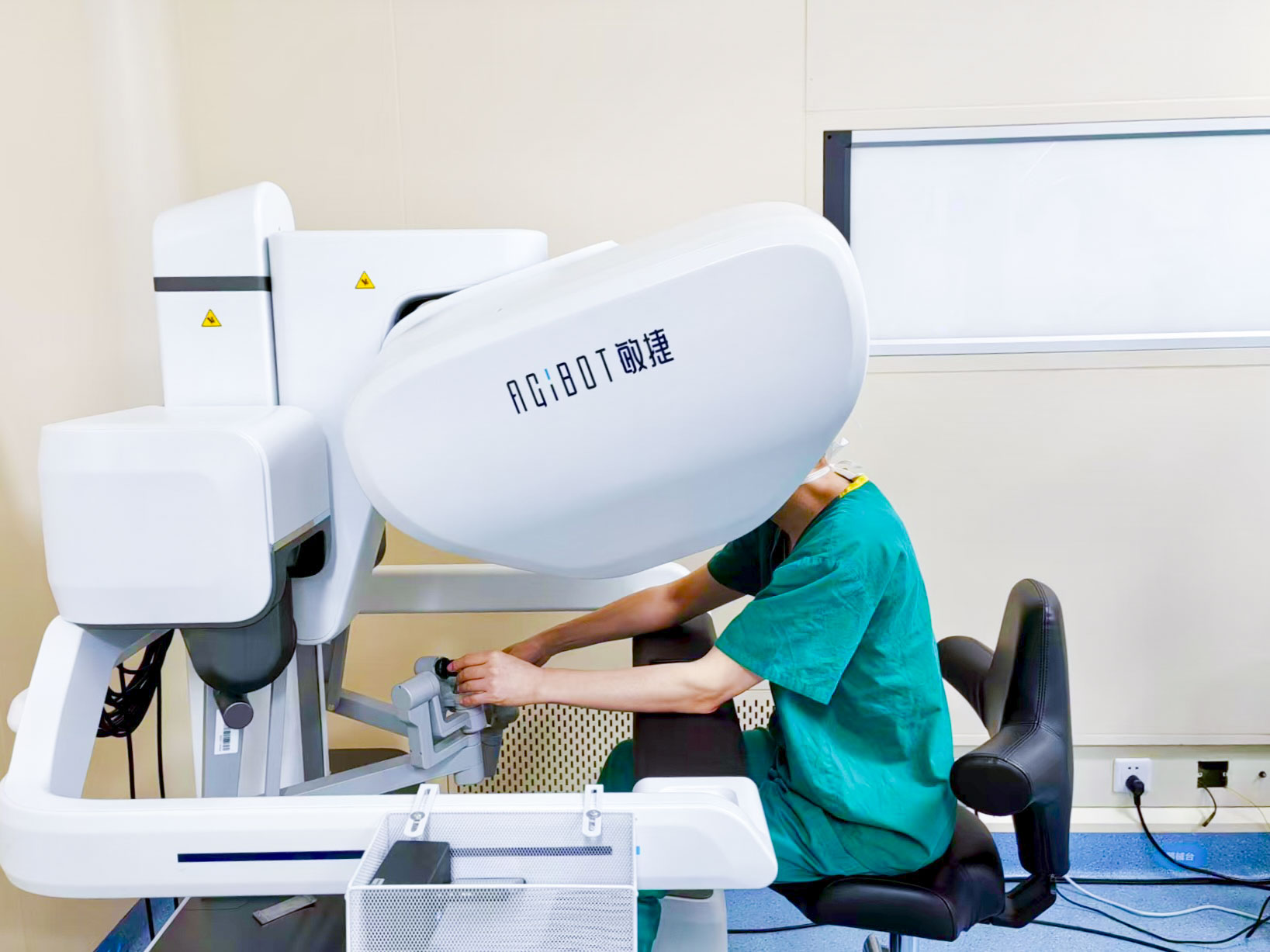
Intraoperative view of Dr. Zhang Ping's team
Dr. Zhang commented after the surgery: "Remote surgery tests team coordination and also the preoperative assessment of the equipment's supportive capabilities. We incorporated visual precision, link stability, and contingency plans into our protocol design, and the system met our expectations."
Three‑Arm Choice: Nephrectomy in the Presence of 2000 ml Hydronephrosis
In another case of unilateral total nephrectomy, Dr. Peng Qing faced a procedural choice under limited space: how to minimize access‑related trauma while ensuring adequate exposure and controllable manipulation?
The patient’s right kidney is non-functioning and presents with severe hydronephrosis, with a fluid volume of approximately 2,000 ml. The affected kidney is markedly enlarged, causing compression and displacement of surrounding structures, and the operative space is extremely limited. A conventional four-arm configuration may increase interference from the instrument arms and also require additional puncture sites.
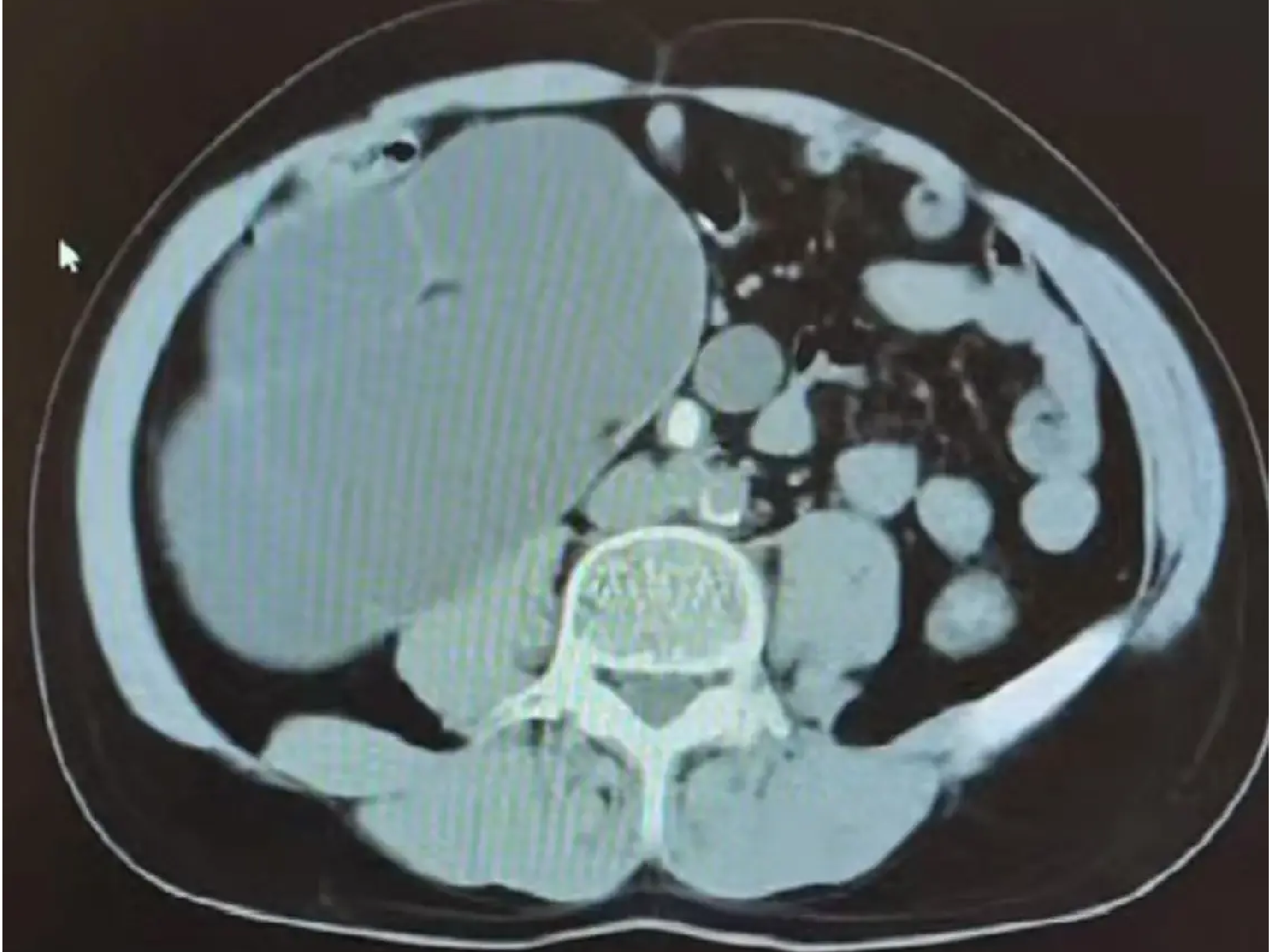
CT
Dr. Peng Qing opted for a three‑arm approach: reducing puncture channels on one hand, and minimizing mutual interference between instrument arms in the confined space on the other. The AGIBOT's mechanical suspension configuration supports multi‑angle dynamic adjustment, providing a foundation for staggered three‑arm operation.
During the procedure, the system, with the three‑arm layout, assisted in completing key steps such as renal capsule mobilization, management of renal vessels, and extraction of the diseased kidney. The dynamic adjustment of the mechanical suspension provided the necessary operating angles and movement stability for fine dissection.
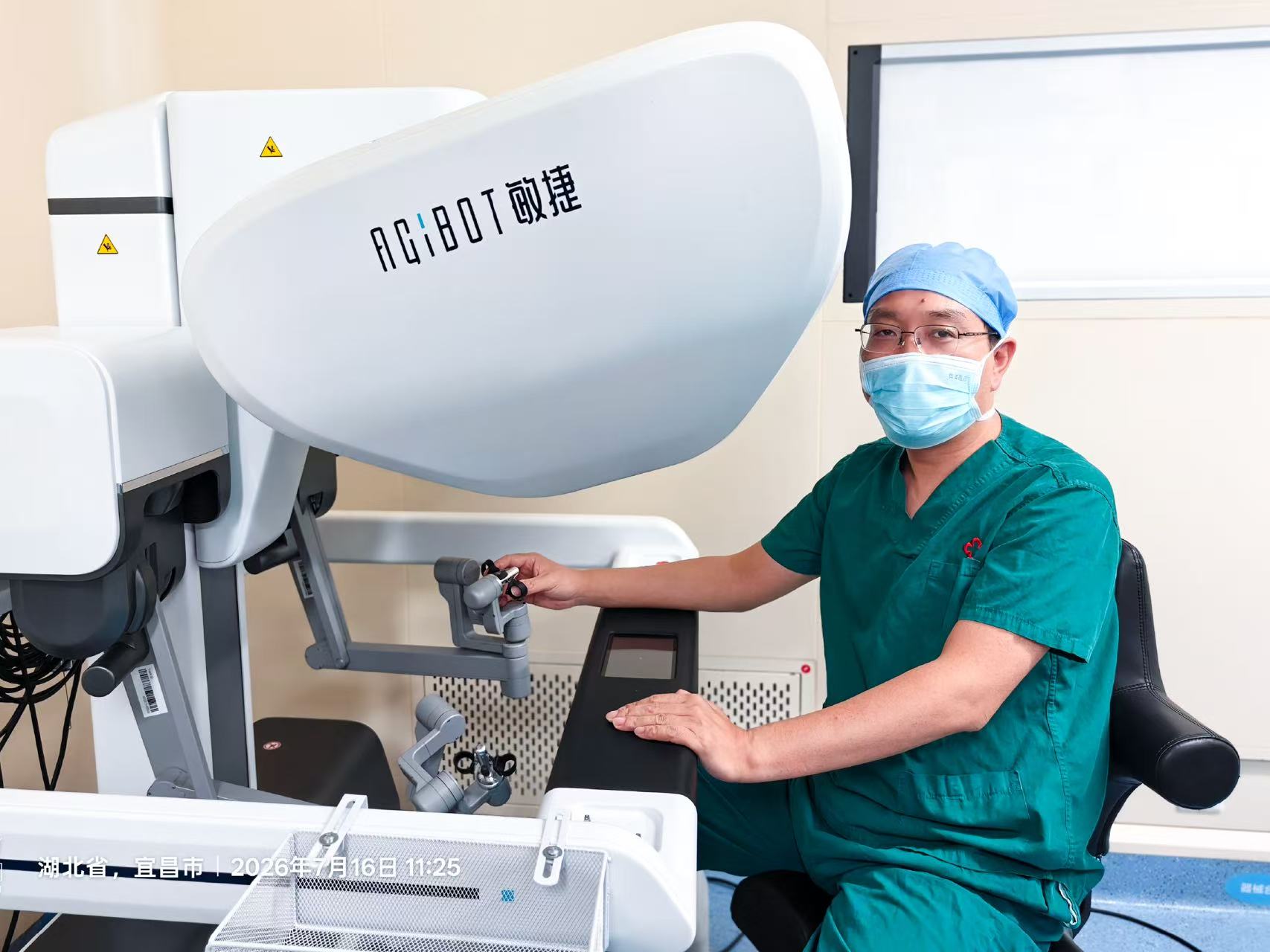
Dr. Peng Qing operating the AGIBOT System
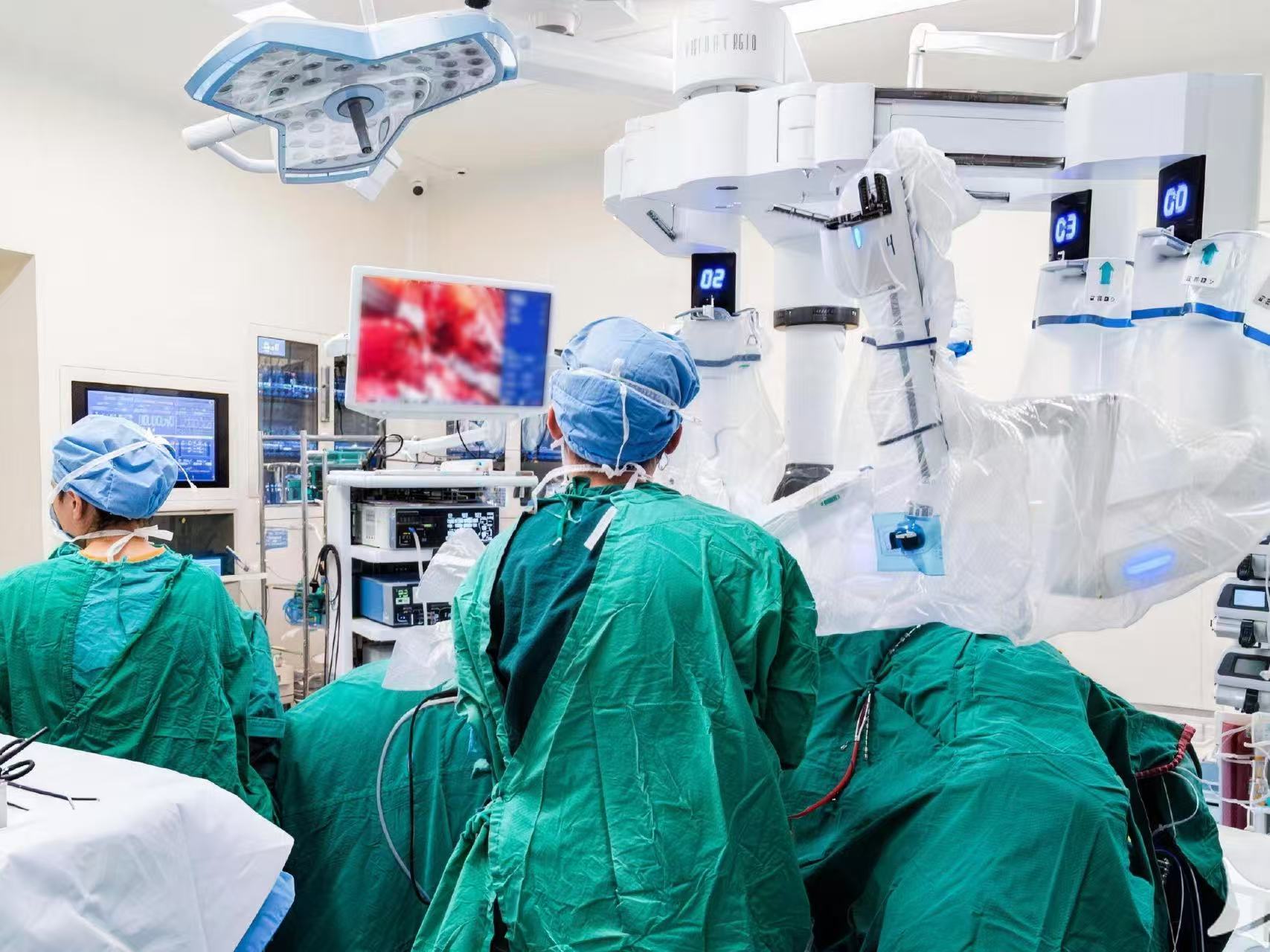
Intraoperative view of Dr. Peng Qing's team
Dr. Peng Qing remarked after surgery: "When choosing the three‑arm approach, I considered whether the working angles and retraction would be limited. In practice, the instrument responsiveness and haptic feedback supported this plan." This is precisely the value of the robotic system: offering surgeons more feasible options when devising surgical strategies based on patient conditions.
Product Response Rooted in Clinical Judgment
The 8 surgeries at Yichang Central People's Hospital demonstrate the same system's ability to coordinate clinically with different surgeons, across diverse pathologies and in varied scenarios.
According to the on‑site team records, all relevant surgeries were completed as planned, with no procedure adjustments or conversions due to equipment issues, nor did any surgeon need to alter their intended operative plan because of equipment limitations.
This also reflects AGIBOT's value proposition of "Innovation, Practicality, and Accessibility" at the frontline of clinical care: with 4K 3D vision, low‑latency links, mechanical suspension architecture, and a modular patient cart, the system supports surgeons in leveraging the equipment according to their clinical judgment, rather than being constrained by it.
Transitioning from single‑case validation to routine scheduling relies on consistent performance in each and every operation.
AGIBOT’s ongoing focus is on continuous iteration in response to genuine clinical needs, ensuring that equipment provides more reliable support for multidisciplinary scheduling and responds more accurately to clinicians’ judgements.
2026.07.23