


AGIBOT Dynamics
AGIBOT Surgical System Debuts at the 2026 Seminar on China-Africa Hospitals Collaborative Development: Domestic Surgical Systems Accelerate Their Journey Toward the "Health Silk Road"
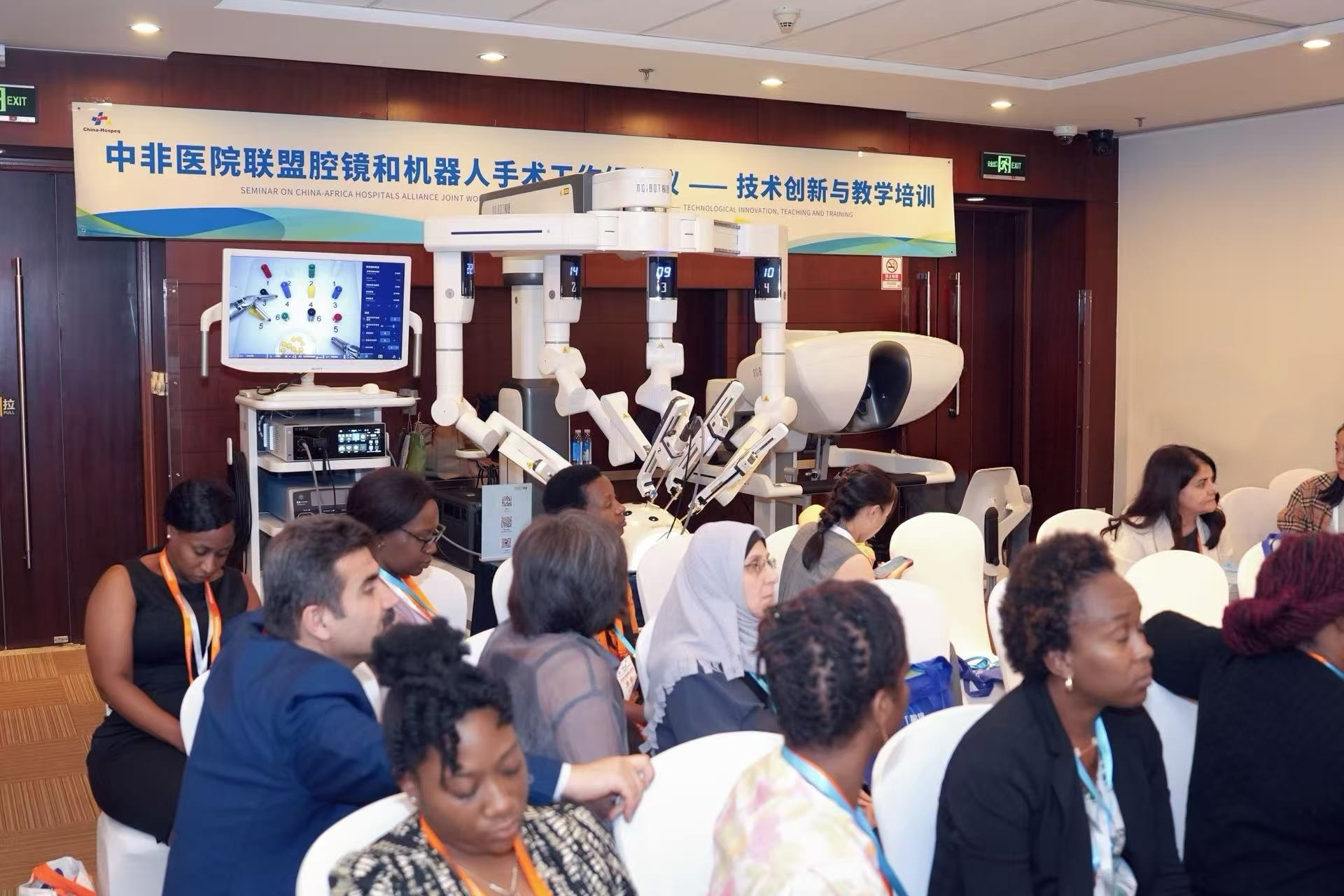
From August 14 to 17, 2026, the 2nd Seminar on China-Africa Hospitals Collaborative Development, hosted by International Cooperation Center of the National Health Commission of the PRC, successfully concluded at the China National Convention Center in Beijing. Guided by the theme “Jointly Building a China-Africa Community of Health for All”, the conference attracted over 10,000 delegates from more than 60 countries and regions. Joint working groups and member units of the China-Africa Hospitals Alliance gathered onsite to engage in multi-level exchanges and discussions. As a key showcase area of this conference, medical robots garnered widespread attention. Representing high-end domestic medical equipment under the alliance framework, the AGIBOT Endoscopic Surgical System completed technical exhibitions and academic exchanges at two thematic sessions—the Laparoscopic & Robotic Surgery Joint Working Group and the Minimally Invasive Urology Joint Working Group—emerging as one of the focal points both inside and outside the venue.
From Technological Innovation to International Exchange: Beijing Sub-Session Focuses on Robotic Surgery Cooperation
On August 15, Meeting of the China-Africa Hospitals Alliance Working Group on Laparoscopic and Robotic Surgery held the working meeting themed "Technological Innovation, Teaching and Training". Professor Hu Sanyuan, leader of the working group and from Qilu Hospital of Shandong University, delivered a keynote report outlining the current development status of laparoscopic and robotic surgery in China as well as the prospects for China-Africa cooperation. He pointed out that the multiple challenges facing the promotion of surgical robots in Africa include high equipment procurement and maintenance costs, insufficient supply chain stability, high demands on power and network infrastructure, and weak local training capabilities—the key bottlenecks restricting technological implementation.
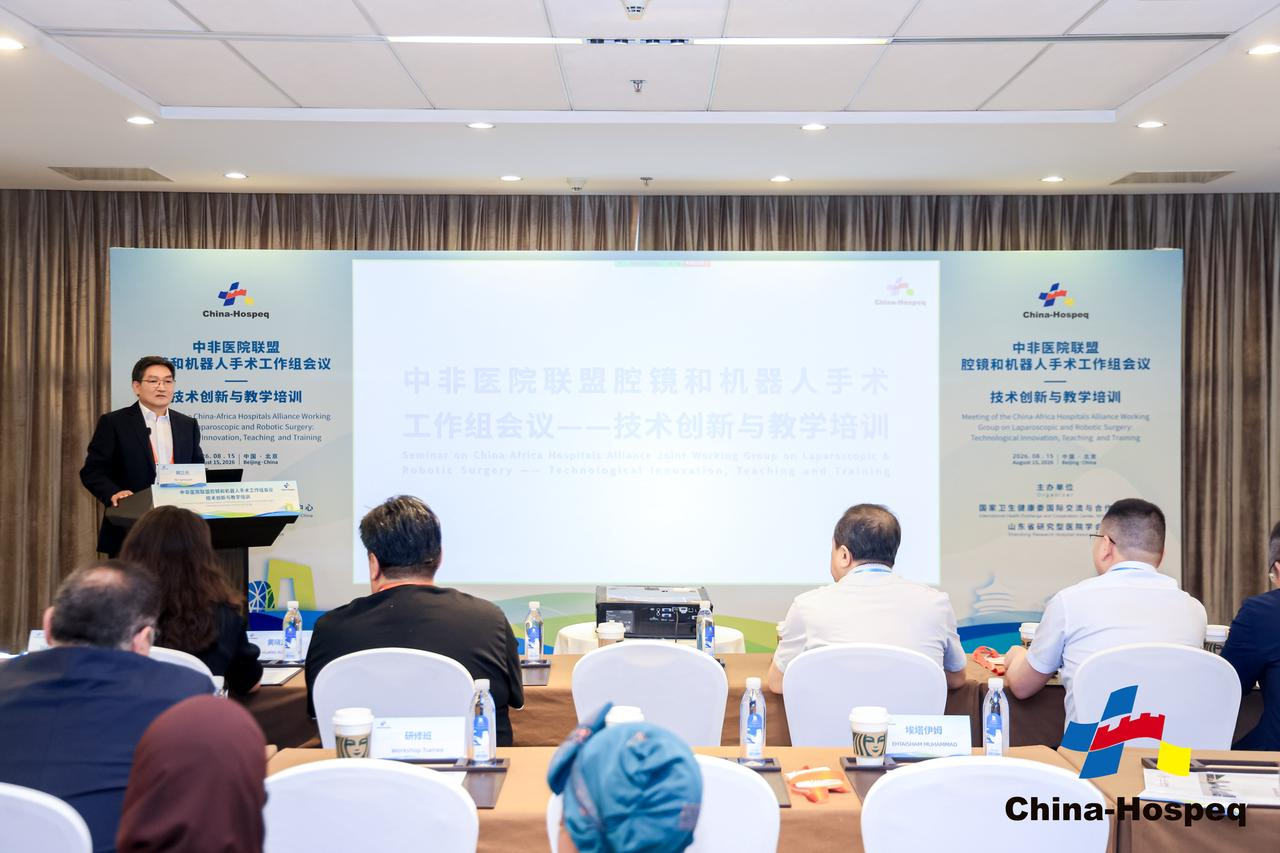
Professor Hu Sanyuan presents the clinical application of surgical robots
Addressing these pain points, Professor Hu used the AGIBOT Surgical System as an example to analyze domestic equipment's explorations in resolving practical African needs: Full-chain independent research and development and a domestic supply chain fundamentally reduce equipment procurement and consumable replacement costs;the integrated overhead boom design and visual dual guidance system shorten pre-operative preparation time to under 3 minutes, lowering requirements for operating room support conditions; 8-degree-of-freedom surgical arms and tremor filteration algorithms guarantee operational safety in complex surgical procedures;remote system end-to-end latency controlled within 80ms makes real-time remote guidance by experts for African physicians to complete surgical operations practically feasible.
During subsequent sharing sessions addressing topics such as Single-Port Robotic Gynecological Surgery, Clinical Applications of Hysteroscopy and International Training, participating experts repeatedly highlighted the AGIBOT System's performance in terms of surgical adaptability and operational precision. In the discussion session, delegates from multiple African countries spoke enthusiastically, combining their domestic realities to address issues such as equipment introduction, personnel training, and technological adaptation. Many representatives noted that what Africa lacks most at present is not "the most expensive equipment," but rather systematic solutions that are "easy to learn, affordable to use, and backed by responsive services"—precisely the issues that the AGIBOT System actively addresses in its internationalized training. Supported by Qilu Hospital of Shandong University as the working group's first core training base, the AGIBOT Surgical System is exploring layered training pathways tailored for African doctors, gradually forming a replicable model of technology output and capacity building that spans simulation training, remote guidance, and intraoperative hands-on practice.
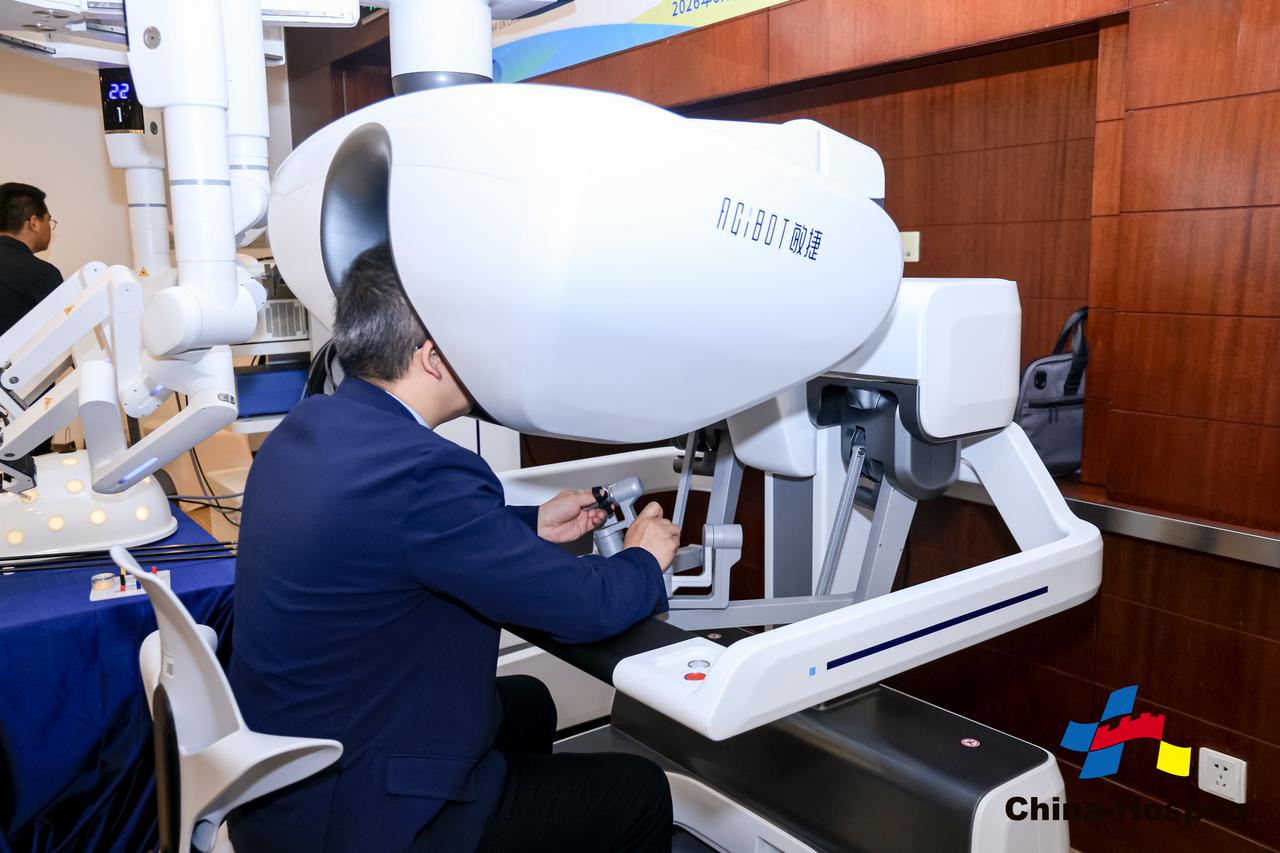
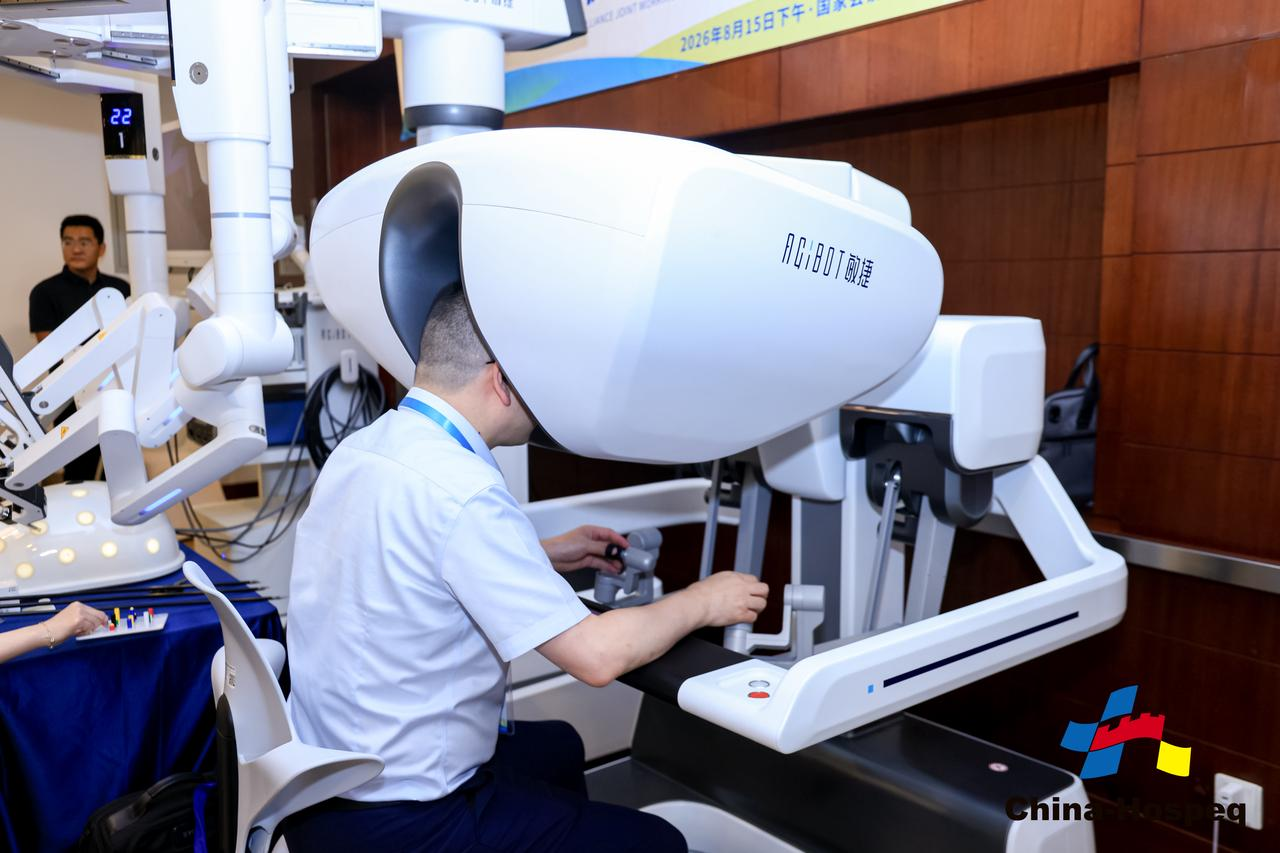
Entering the Real Operating Room: International Experts Observe AGIBOT System Performing Single-Port Surgery
The discussions at the Beijing sub-session pointed toward a clear direction: Africa needs not just a piece of equipment, but a set of operable surgical capabilities. Two days later, the operating room of Nanjing Drum Tower Hospital provided a concrete sample to answer this question—for surgical robots, product exhibition is merely the beginning of communication. What truly tests a system is always its real-world application in the operating room. On August 17, the China-Africa Urology Alliance & Asia-Africa Urology Alliance Collaborative Group organized a high-level academic exchange and delegation visit at Nanjing Drum Tower Hospital. Led by Ahmad Said Zribi, President of Pan African Urological Association (PAUSA), a core team attended the event. Urological experts from more than ten countries including Egypt, Morocco, and Zimbabwe were present to engage in deep academic exchanges with their Chinese counterparts.
During the visit, Professor Xu Linfeng operated the AGIBOT Surgical System to live-demonstrate a high-difficulty single-port laparoscopic radical prostatectomy for international experts. The patient was a male in his 70s with a tumor stage of T2N0M0 and a prostate volume of approximately 50g. Compared to multi-port laparoscopy, single-port laparoscopy provides a much narrower operating space where instruments are highly susceptible to collision interference, presenting extreme difficulty even for experienced surgeons operating manually. Completing such pelvic surgeries using a multi-arm robot places exceptionally high demands on both physician technique and equipment performance. Throughout the procedure, the AGIBOT Surgical System demonstrated exceptional control performance: the surgical arms were flexible and precise, anatomical planes were clear and distinct, and every step from precise dissection to meticulous hemostasis flowed naturally. Observing experts closely followed the surgical process throughout and engaged in in-depth discussions surrounding robot operation, single-port technology, and clinical applications in urology. Following the surgery, the experts spoke highly of Professor Xu Linfeng's exquisite skill and the outstanding performance of the AGIBOT Surgical System.
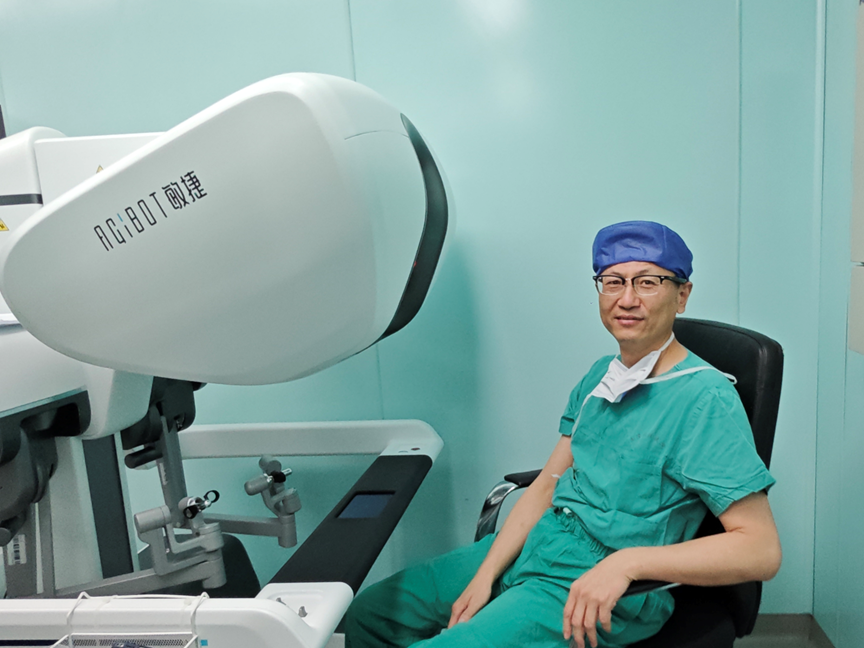
Professor Xu Linfeng operates the AGIBOT System
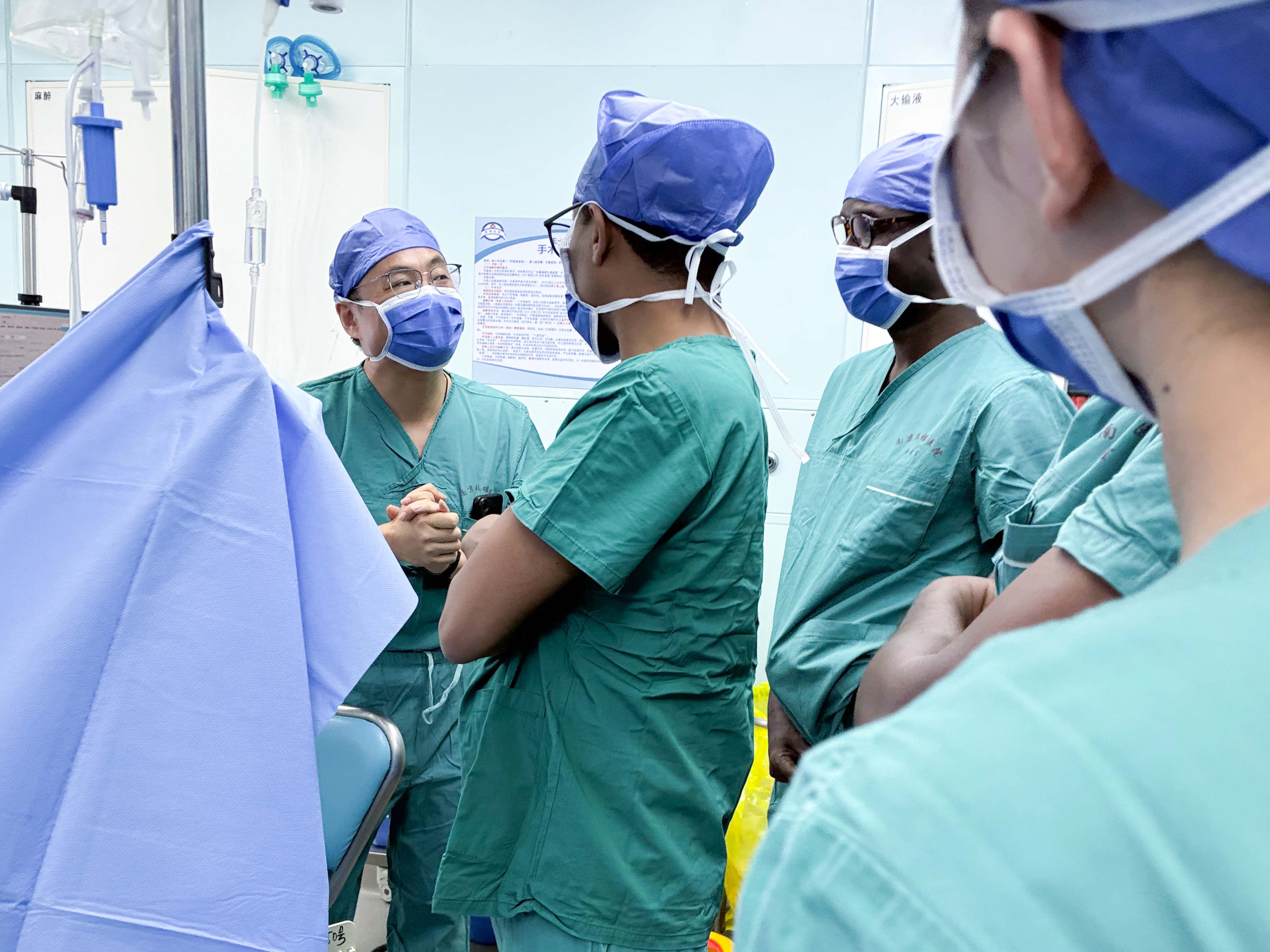
Professor Qiu Xuefeng introduces AGIBOT System to international experts
From "Viewing Equipment" to "Witnessing Clinical Practice": Technical Exchange Advances Toward Capacity Co-Building
From the technical seminar in Beijing on August 15 to the surgical observation in Nanjing on August 17, the two events formed a complete pathway of exchange ranging from technological awareness to clinical verification. In Beijing, international experts learned about the current development status of Chinese robotic surgery through thematic reports; in Nanjing, the AGIBOT System stepped out of the lecture hall and into the operating room, completing a clinical capability demonstration for urological experts from over ten countries during a real single-port radical prostatectomy. This precisely reflects AGIBOT's core aspiration in participating in this conference: going beyond merely introducing equipment to present potential partners with real clinical performance and operational experience once the system enters practice.
Looking toward the period of the "15th Five-Year Plan," as the joint construction of “the Belt and Road” Initiative continues to deepen and materialize, international cooperation in the health sector is shifting from single medical services and equipment trade toward discipline building, technological exchange, talent cultivation, and capacity co-building. The AGIBOT System is an active practitioner of this trend. Relying on the platform resources of the China-Africa Hospital Alliance, AGIBOT is partnering with multiple authoritative tertiary Grade-A hospitals and core collaborators to explore layered training pathways for African physicians, progressively establishing a replicable model of technology transfer and capacity building spanning simulation training, remote guidance, and intraoperative practice. Allowing a surgical robot to enter the operating room is the first step toward technological implementation; ensuring that the clinical experiences built around this machine can be communicated, understood, and applied represents the long-term value of medical technological cooperation. AGIBOT will take this as its direction, continuously driving the deep participation of domestic surgical robots in international specialist exchanges, physician training, and clinical applications.
2026.08.20